| Healthy Buildings 2023 Europe
|
Healthy Buildings 2023 Europe (June 11-14, 2023 in Aachen, Germany) has extended the early bird deadline until March 10, 2023. Register today and benefit from reduced costs. Organizers are expecting 6 keynotes, 15 workshops and more than 200 presentations.
Do you prefer to participate online? Help the organizers to make a decision whether there is sufficient interest in the hybrid option and register now. Registration fees rise sharply after the deadline. More information on prices and conditions for online participation can be found here.
Are you a PhD student? Get one of the few seats left for the PhD Summer School Day just ahead of the conference by registering now. More information here.
|
|
|
| Healthy Buildings 2023 Asia
|
The application for student conference support award to participate in Healthy Buildings 2023 Asia (July 16-19, 2023 in Tianjin, China) has opened. The deadline to submit application materials is March 31, 2023. Additional details of the award can be found here.
HB 2023 Asia also continues to invites sponsors of the conference. The conference has received nearly 400 full papers or extended abstracts from 15 countries in Asia and Pacific Rim, America, and Europe. Click here for more details on the conference sponsorship opportunities.
|
|
|
| Indoor Air 2024 North America
|
|
|
Professional Development and Leadership Opportunities
|
March Student Focused Webinar
|
ISIAQ Webinar: Careers in academia: How to land the perfect PhD and post-doc position at your dream institution
Join ISIAQ Student Representative Rita Lam for this webinar, which will bring together faculty members at universities to share their experiences and recommendations. Attendees will have the opportunity to participate in a Q&A during this webinar.
When: Thursday, March 30, 1:00pm Eastern/find your time here.
Who: Priyanka deSouza, Assistant Professor, University of Colorado, Denver, and Elliott Gall, Associate Professor, Portland State University.
Sign up to attend here. |
|
|
The ISIAQ community is constantly reaching new heights and celebrating milestones. We are excited to showcase professional updates and achievements from your friends and colleagues in the community. If you have an announcement to include in our next newsletter, please submit it here. Click "read more" to see the latest news!
Read more... |
|
|
ISIAQ recently completed a website update which affects your membership profile. We encourage all members to log into their member account to review your membership profile. This update will allow you to self-identify pertinent information that will inform future ISIAQ initiatives and opportunities. The update also enables ISIAQ members to search for fellow members by field or expertise, instead of being limited to only be able to search by name. ISIAQ members have the opportunity to also opt-out of their information to be shared with the membership.
| |
|
This year ISIAQ will launch a society-owned journal, which will work toward the society’s goals of supporting the indoor air community with the aim of becoming the world’s leading publication for scientific articles related to processes, effects, and human exposure in the indoor environment.
ISIAQ’s partnership with John Wiley & Sons, Inc. and Indoor Air, the journal formerly associated with ISIAQ, ended December 31, 2022. Since then, the ISIAQ Board of Directors and Publications Committee have diligently worked to identify a new publishing partner to support this initiative. The selection process has included an open solicitation, proposal reviews, publisher presentations, and evaluations by both the ISIAQ Publication Committee and the Board of Directors.
The ISIAQ Board of Directors looks forward to the new opportunity that launching a new journal provides the society and its members and encourages you to be on the watch for more announcements in the following months. |
|
|
|
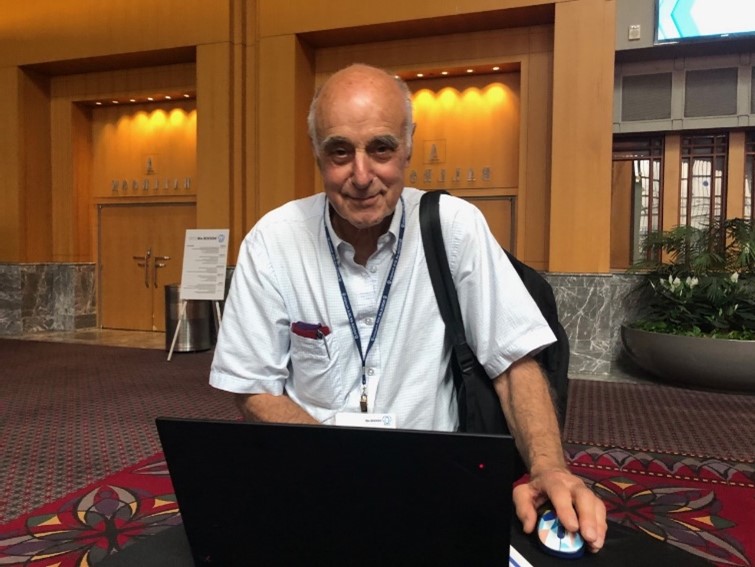
Hal Levin was a passionate architect and a pioneer of indoor air quality research and advocacy. Throughout his rich and long career, Hal conducted research and consulted on buildings’ impacts on occupant health and comfort. Since the 1970s, he was actively promoting the integration of knowledge about indoor and outdoor air pollution into the design, construction, and operation of residential, educational, and commercial buildings and communities. He was consistently sharing his understanding of the term “sustainability” in building research and design: prioritize environmental and human challenges, specify acceptable limits, identify the impacts of each choice, and use weighted criteria to select the most sustainable solutions.
Read more... |
|
|
Swegon is your partner for sustainable indoor-environment solutions that work exactly as desired, at the lowest possible lifecycle cost.
We are a total system supplier. Our offer includes ventilation, heating, cooling and climate optimization systems, as well as connected services and expert technical support. Count on us to add value to your project from start to finish – and beyond. In everything we do, we are guided by a single purpose: to enable healthy, comfortable and safe indoor environments for people to be at their best, today and tomorrow.
We are the proud founder of Swegon Air Academy where research and academia meets the professional users for knowledge sharing, visit us at Swegon.com and swegonairacademy.com.
|
|
|
ISIAQ Developing Country Liaison |
|
|
| Name: Oluyemi Toyinbo (PhD) Affiliation: Department of Civil Engineering, University of Oulu Why did you first become interested in pursuing indoor air quality as a profession?:
I pursued indoor air quality as a profession to bring its awareness to Nigeria and the African continent because emphasis is majorly placed on the strength of building structures with little focus on indoor environmental health. I have ample experience in the field of indoor air quality, performed research on school indoor environmental quality in Nigerian schools and currently preparing protocols for field work on indoor environmental quality in Tanzania schools.
How did you first get involved with ISIAQ?:
My involvement with ISIAQ began in 2012 when I submitted a conference paper that was published in the 2012 Healthy Buildings Conference in Brisbane, Australia. Although I was unable to attend the conference due to funding constraint, one of the co-authors presented the paper at the conference. The paper focused on the association between indoor environmental quality in Finnish elementary schools, health, and academic performance of students.
Tell us a little bit about your role as ISIAQ liaison with the African Society for Air Quality (ASAQ):
Indoor air quality research is seldom done in Africa compared to the developed world and ASAQ is a new organization that encourage atmospheric air quality research in Africa. My role is to initiate cooperation between both ISIAQ and ASAQ and encourage ASAQ to diversify their focus to include indoor air quality research. To do this, we need to first identify the African environment. What is peculiar to Africa? Or what is peculiar to the different regions of Africa e.g., East, West, North and southern part of Africa? How different buildings and types of ventilation/heating systems differ? What are some of the sources and types of pollutants that can affect the indoor environment in Africa.
How do you think those working on indoor environments in African countries can benefit from collaborating with ISIAQ?:
African countries collaborating with ISIAQ will further encourage indoor air quality research synergy between African countries and the rest of the world.
Since air quality research shouldn’t only be on outdoor air quality, ISIAQ can help find collaborators for which African universities/research institutions can jointly seek funding via research proposals. Collaboration can also be in terms of loaning indoor air quality equipment from developed countries to developing countries and vice-versa, which can encourage research exchange. What are some ways you’d like to see ISIAQ outreach with countries in Africa grow?: - Special sessions about Africa and African research should be initiated at ISIAQ conferences.
- Regional African conferences should be proposed.
-
Subsidies and financial aids should be given to African researchers going for ISIAQ conferences.
- ISIAQ membership dues should also be lowered for African researchers to encourage them to register.
If ISIAQ members are interested in serving in similar outreach roles, how would you recommend they get started?:
They should first get registered with one of ISIAQ STCs (scientific and technical committees) to get familiarized with ISIAQ processes. |
|
|
ISIAQ Corporate and Other Organizational Members |
Any reference obtained from this communication to a Corporate/Other Organizational Member does not constitute or imply an endorsement by ISIAQ of the product, process, or service, of its producer or provider. The views and opinions expressed by any Corporate Members do not necessarily state or reflect those of ISIAQ. |
|
|
|